- Have swimmers form pairs or partners
- Give each pair 1 noodle
- Both partners are to be on TOP of the noodle in some fashion (some swimmers will straddle the noodle, others will lay over it; ultimately its up to you to choose which way to go).
- Race to the other end, or race to the other end and back.
Month: January 2026
-
Swimming Game – Noodle Race Partners
This game is good for developmental swim teams, large swim lesson classes, or the more advanced swimmers. You will need: 1 noodle for every 2 participants -
Swimming Game – Duck Partner Kick
This is a great game to play with both swim teams and swim lessons. Ideally your swimmers will be able to kick with a kickboard by themselves for more than 4 lengths. Start at one end of the pool with everyone- Have swimmers form partners
- Give 1 little rubber duck to each group
- Swimmers must keep the duck on the kickboard any way they can while kicking
- Swimmers are not allowed to use their hands from the wrist down
- can use any other part of their body to either hold, or rescue their duck
- 1 partner goes first and goes down and back
- Pass the duck to the other partner without using hands
- Second partner goes down and back
- Continue for specified duration
-
Swimming Game – Treasure Hunt
This swimming lessons game works best in a zero-depth pool; a pool that simulates a beach. There are a number of swimming skills that it works on, and many more depending on how creative your instructors or you are.
Treasure Hunt:
- Get a kickboard. This will be your “boat.”
- Every child in your class is a pirate or a treasure hunter. The instructor is the Captain. The captain steers the boat, the children go around it.
- Instructor does an alligator walk while pushing the “boat.”
- Children do alligator walks behind or around instructor and “boat” while hunting for treasure.
- When instructor / Captain gets to a certain point, throw toys or rings, out into the water and have the pirates/children/hunters go find treasure.
- Put rules on children, can only get treasure if they go underwater, or do a front float, or blow bubbles.
- Bring 1 piece of treasure back to the boat at a time. Stack the treasure on the boat.
- Alligator walk with bubbles on the way back, to help the boat laden with treasure move faster.
- OPTIONAL! Run into a storm and lose the treasure and find it again with new activity: back floats/underwater 2x/etc.
- Pull into harbor/where class began and give rewards for treasure; exmp: Buckethead!
This game works REALLY well to do alligator walks, underwater, and blowing bubbles IF the instructor is willing to suspend their disbelief and play with the children.
Excellent game for 2-5 years.
Additional information added 4/3/2023:
Swimming Lesson Game: Treasure Hunt
Are you looking for a fun and effective way to teach your students how to swim? If so, you might want to try the treasure hunt game. This game is a great way to motivate your students, practice different skills, and have a lot of fun in the water. Here is how it works:
How is it played?
The treasure hunt game is simple to set up and play. All you need are some small objects that can sink to the bottom of the pool, such as coins, rings, or toys. You can also use pool noodles or kickboards to mark the boundaries of the treasure area. Before the game starts, scatter the objects in the designated area and make sure they are visible from the surface.
To play the game, divide your students into two teams and assign them a color or a symbol. Each team has to collect as many objects of their color or symbol as possible within a certain time limit. You can also assign different points to different objects depending on their difficulty or value. For example, a coin might be worth one point, while a ring might be worth two points.
The students can use any swimming technique they want to retrieve the objects, but they have to follow some rules:
- They have to stay within the treasure area and not cross the boundaries.
- They have to return to their team’s base (a wall or a lane marker) after each dive and place their object in a bucket or a basket.
- They have to take turns diving and not interfere with the other team’s divers.
The game ends when the time is up or when all the objects are collected. The team with the most points wins.
Who is the game for?
The treasure hunt game is suitable for students of different ages and levels. However, you should make sure that your students are comfortable with diving underwater and holding their breath for a few seconds. You should also adjust the depth and size of the treasure area according to your students’ abilities and safety.
The game can be played with small or large groups, but you should try to balance the teams in terms of number and skill. You can also modify the game by adding more or less objects, changing the time limit, or introducing different challenges or rewards.
What skills does it work on?
The treasure hunt game is a great way to work on various swimming skills, such as:
- Breath control: The students have to exhale underwater and inhale at the surface.
- Diving: The students have to dive down to reach the objects.
- Streamlining: The students have to keep their body in a straight line while diving and swimming.
- Kicking: The students have to use their legs to propel themselves underwater and on the surface.
- Arm strokes: The students have to use their arms to pull themselves underwater and on the surface.
- Buoyancy: The students have to adjust their buoyancy to sink or float.
- Coordination: The students have to coordinate their breathing, diving, swimming, and grabbing skills.
- Endurance: The students have to swim back and forth between their base and the treasure area multiple times.
- Teamwork: The students have to cooperate with their teammates and follow the rules.
The treasure hunt game is a fun and effective way to teach your students how to swim. It can help them improve their skills, confidence, and enjoyment in the water. Try it out in your next swimming lesson and see how your students react!
-
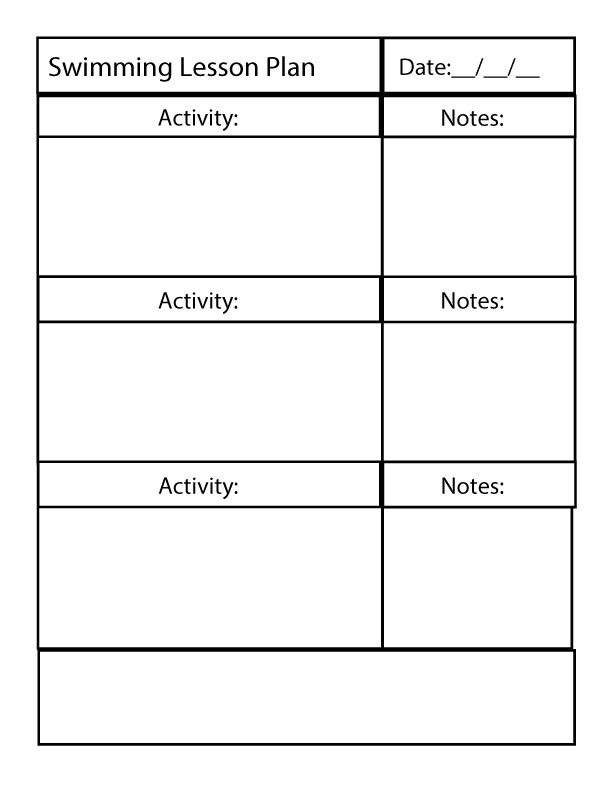
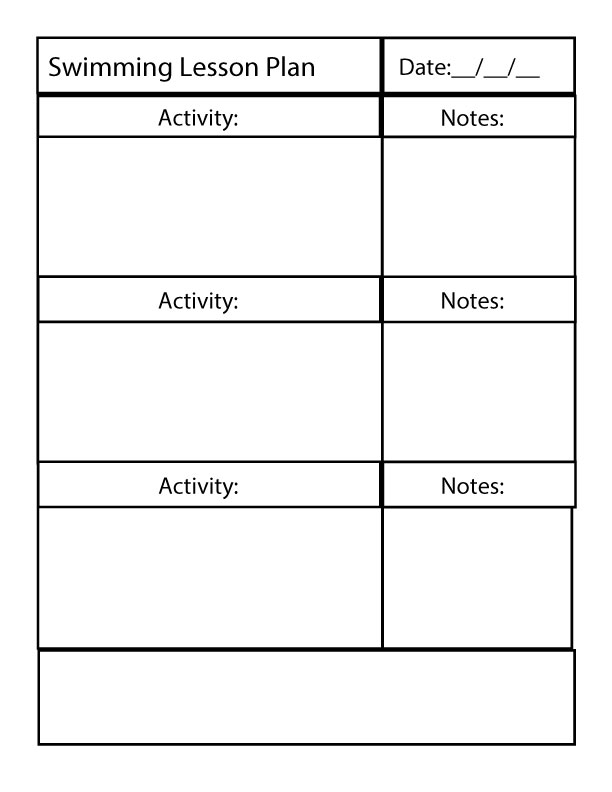
Swimming Lessons Plan – Swim Lesson Plan Template
Use the following generic template to write your own swimming lessons plans.
Most lessons are 30 minutes, and you can break up your lessons into three 10 minute blocks. I generally focus on one skill like Freestyle in a 10 minute block, working on glides, streamlines, kicking and arms. After 10 minutes of that do 10 minutes of backstroke, then 10 minutes of games, jumps, underwater work.
Good LUCK!
Want a real plan? Check out our store with high quality tested swim lesson plans designed to provide fun and effective swim games.
-
Swimming Game – Parent Tot – Hokey Pokey
Dancing in the pool Hokey Pokey For Parent Tot Swimming Lessons
The best thing for infant swimmers is routine. Repetition, repetition, repetition, repetition. If you play the Hokey Pokey in your class, I suggest you do it at the end of your class session. It can be time consuming, and get monotonous and droll. Focus on a few key points.- Put your feet in and shake them all about. Starting with the feet will re-emphasize kicking that you ideally spent 1/2 your class time working on in some fashion. Remember! Babies/2.5 year olds are not able to fully move their bodies yet in those fine motor movements.
- Put your Hand in, put your hand out! Focus on the reaching motion of the arm and the hand. We’re looking for macro movements (long large body motions, not cupped hands and s-curve pulling).
- Put you whole face in and blow a bubble out! #1 goal of any preschool class?? Go underwater and make it as natural as possible.
-
Swimming Game – Slalom
We play this game with the middle groups of our swim team.
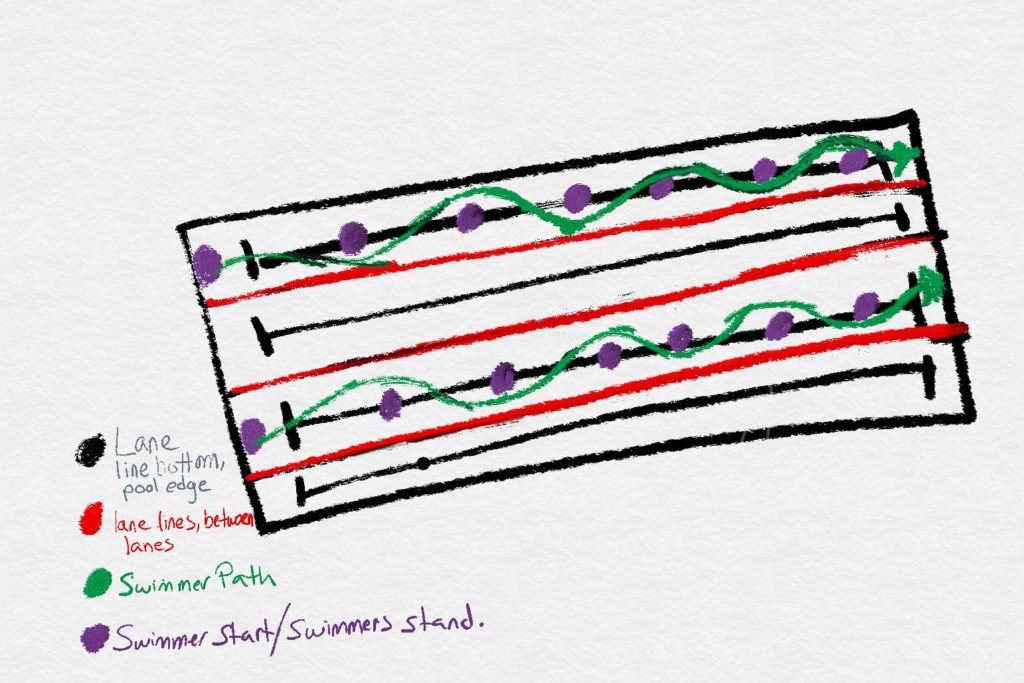
Have at least 7 people in each lane.
Have 6 people stand on the middle line down the middle of the lane (on the bottom of the pool)
1 swimmer will push off the wall, and then slalom around the standing swimmers. They must weave back and forth between people until they reach the other end of the pool.
If you have enough people do have 2 lanes, then the swimmers can race each other.
Once the swimmer has completed the slalom, all swimmers should shift forward one space, and then the next person can slalom.
We generally only play this game when doing FLY kick on your side. The goal is the periodically exaggerate the fly kick motion with the hips while on the side. Swimmers are DQ’d for going on their back or stomachs. We encourage them to “Swim like a shark.”
-
Swimming Game – True or False
We play this game at the end of our swim team practices. Typically we go to the diving well (if we have one).
The game is True or False, and there are two ways to play:
1) Swimmers stand on the side with their toes curled over the edge. If the coach says something true, then the swimmers need to jump in, and the last to jump in is “out” until there is a winner.
If the coach says something False, then the swimmers do not jump in. If someone does jump in, they are out until there is a winner.
The winner is the final person still in.
Every round there will be at least 1 person out. If there is a true statement, and some jump in and some do not, then the only those that did not jump in are out as technically they would have been “last.”
2) Swimmers line up on the wall IN the water. When the coach says something true, swimmers have to swim to the other side of the diving well. The last person to touch the wall is out, or if you do not swim, and it was true, the swimmer is out.
If a swimmer lets go of the wall completely and comes back, it is considered a “true” guess, and if the coach said something false, then the swimmer is out.
When we play this game, we focus on swimming related topics, though the questions can range in anything you deem appropriate. Here are some examples:
“This is a 50 meter pool.”
“This is a 50 yard pool (false)”
“In the 100 yard IM there are 3 flip turns (false).”
“The order of a 100 IM is Fly, Back, Breast, Freemile” (false freemile /= Freestyle)
“There is 1 flip turn in a 50 meter freestyle, long course. (False).”
“You should always streamline first in any stroke.”
Have you played this game? or a version of it?
-
Swimming Game – Driving the Stake
You’ll need a deep pool to play this game!
Have your swimmers find a partner.
One swimmer gets in as straight as a body position as possible, hands at sides, feet together, and head in line with the spine (basically streamline with hands at hips).
The partner pushes the straight swimmer by the shoulders straight down.
The goal is to get to the bottom as fast as possible while keeping the body straight.
Each pair should perform the pushing down 3 times to their partner, and then switch and do 3 times.
Put rings or toys at the bottom for the swimmers to “aim” at to make more challenging and fun.
This game works on teamwork and, most importantly, body position.
In swimming, maintaining a strong core and almost rigid body position is crucial for gaining significant speed in freestyle and backstroke. Rotating from the hips and locking the spine and legs in as straight of a line as possible ensures a faster swim.
Playing this game tricks the swimmers into practicing a straight body in a way they may not always experience: going feet first and down. The hidden benefit is that the more they are used to getting long, tall, straight, strong body line, the more likely they’ll remember that feeling as they swim doing their streamlines, glides, or freestyle.
-
Swimming Game – Champion Swimmer
Advanced swimmer game:
Have each lane pick one “champion” that will participate. Do not tell the swimmers what stroke or activity they will be doing.
After each lane has chosen a Champion, tell them what they will do. EXAMPLE: Champions must swim a 50 Freestyle with flip turn and correct streamline.
If the champion passes or succeeds, then the lane does the same activity together. Champion gets to rest. EXAMPLE Lane does 50 Freestyle.
If the champion fails, or does an illegal stroke, the lane and the champion has to do 2x the activity KICK. EXAMPLE: 100 FREE Kick.
Tips: Include correct streamlines with locked thumbs and squeezed ears to increase challenge. Include specific steps of an open turn, flip turn, underwater pullout, or fly kicks off the wall, or breathing in and out of turn.
-
Swimming Game – Spider
Game Name: Spider.
Skills Developed: Breath control, confidence and swimming under water.This game is meant for private classes that do not have too many learners. There are two roles: one swimmer will act as the web while another acts as the spider.
The thing that should act as a pre-requisite for this game is that the swimmers have to be willing to swim under water, or at least that is the skill they are going to hone through playing this game.
The “spider” puts a foot and hand on each wall in the corner. Instructions:
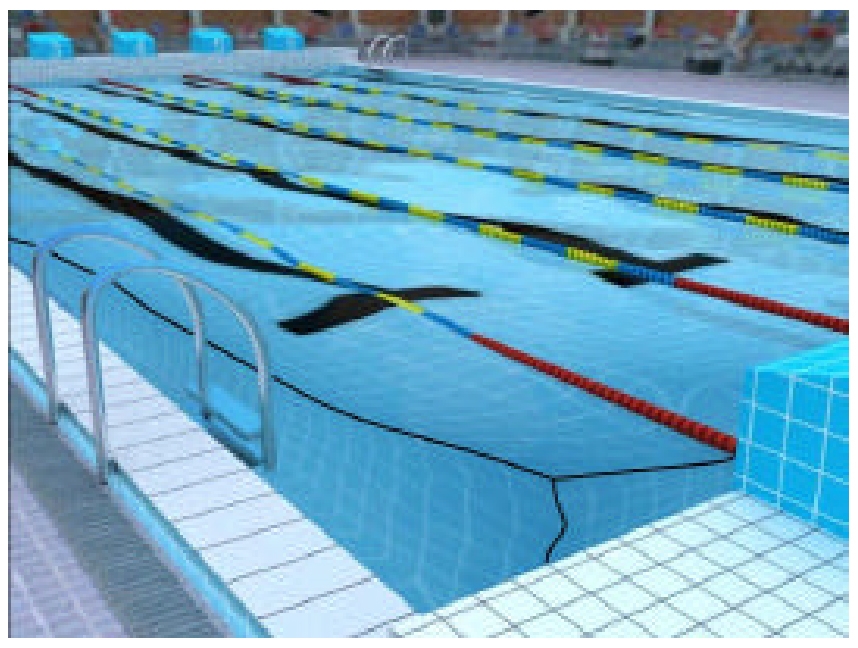
Have one swimmer go to the corner of the pool and have their right hand holding onto one side of the pool and the left hand holding onto the other. The same with their legs, the right to one side of the pool, touching the wall and the left to the other, touching the wall as well. The point is to have some space between them and the corner walls of the pool. This is the swimmer that will act as the web.
The swimmer that will act as the spider is to try and swim through the webs limbs. They are to swim between the right arm and right foot of the web and go through to the left arm and left foot, passing between the web and the corner walls. Like threading a needle. They are then come up under both legs to end up inside the web. The trick is to do all this without resurfacing for air and without touching the web at any one point.
As the teacher, you can have the spaces between the webs limbs vary according to the desired skill level. You could start off by letting the swimmers touch the web and resurface for air as you horn in on the skill levels you are aiming for. As time goes, they are to do this without touch and breath. Have the players continuously switch roles.